HYR hyrcnc Intelligent CNC Solutions

Case Study

Automotive Case Study 17 / 20

Turbocharger Housing Machining Case Study

The turbocharger is one of the most important technologies in modern engines.
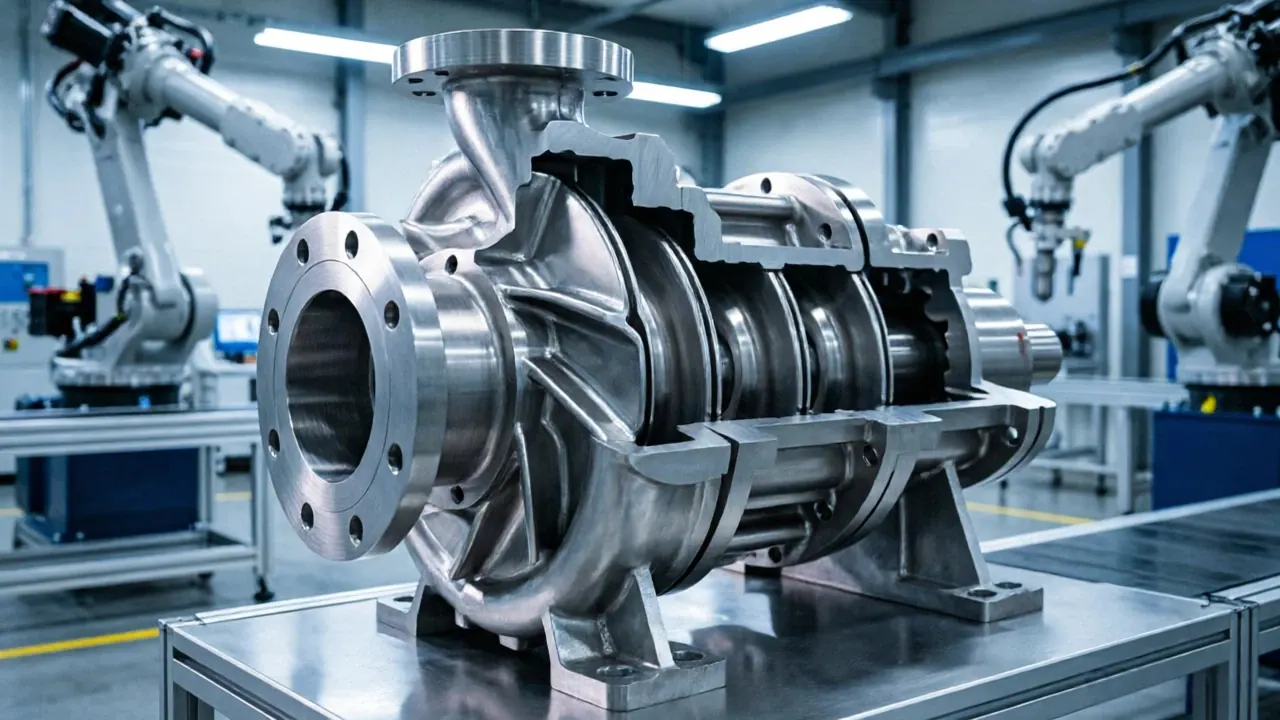
turbocharger housing machining case studyautomotive cnc machining case studycnc machine for automotive parts
Turbocharger Housing Machining Case Study

Case Overview

Core project data for this machining case.

Industry Automotive / Aerospace
Product Turbocharger Housing
Material Aluminum 356-T6 / Inconel 713C / Cast Iron
Process Casting + Heat Treatment + CNC Machining
Machine Model HYR VMC850 / VMC1060
Tolerance +/-0.01 mm
Surface Finish Ra0.8
Production Capacity Project based

Problem

Machining problem to solve

Turbocharger housings are notoriously difficult to machine.

Solution

HYR-CNC machining plan

The customer is a Tier-1 turbocharger manufacturer. Products include: Passenger vehicle turbochargers Diesel turbochargers Twin-scroll turbochargers Variable geometry turbochargers

Machine Used

Recommended machine configuration

Machine: HYR CNC machining center selected according to part size, material and tolerance
Process: Rough machining, semi-finishing, finish machining and inspection based on the document case
Accuracy Control: Fixture planning, deformation control, stable toolpath strategy and CMM inspection
Cost Method: Published with existing website assets first to keep implementation cost low

Process

Timeline from raw material to inspection.

01 Typical process:
02 Casting
03 Heat Treatment
04 Shot Blasting

Full Case Article

Machining background, difficulty and solution logic.

Quick Facts

Item Details Industry Automotive / Aerospace Product Turbocharger Housing Material Aluminum 356-T6 / Inconel 713C / Cast Iron Manufacturing Process Casting + Heat Treatment + CNC Machining Machine HYR VMC850 / VMC1060 Tolerance +/-0.01 mm Surface Finish Ra0.8 Application Passenger Cars / Trucks / Racing Cars / Aerospace

Introduction

The turbocharger is one of the most important technologies in modern engines.

Its function is simple:

Use exhaust gas energy to compress intake air.

But behind this principle lies an extremely demanding precision component:

A turbocharger generally consists of:

Turbocharger Housing

Turbine Housing

Hot side.

Receives:

Temperature:

Exhaust gases 700 degreesC↓950 degreesC↓1050 degreesC+

Compressor Housing

Cold side.

Compresses:

Boost pressure:

Intake air 1.2 bar↓2.0 bar↓3.0 bar+

Center Housing

Contains:

Requires:

Ultra-high coaxiality.

The machining quality of these housings directly affects:

Bearings Oil passages Cooling channels Boost pressure Turbo efficiency Fuel economy Engine power Noise Turbo life

Customer Background

The customer is a Tier-1 turbocharger manufacturer.

Products include:

Annual output:

Main problems:

HYR CNC provided a dedicated machining solution.

Passenger vehicle turbochargers Diesel turbochargers Twin-scroll turbochargers Variable geometry turbochargers Electric turbochargers 200,000+Turbocharger Housings Turbine bore deviation Poor sealing surfaces Thin-wall deformation Difficult Inconel machining Low production efficiency

Industry Background

Turbochargers are becoming increasingly important.

Downsizing Trend

Automotive engines are evolving:

Smaller engines.

Higher power.

More turbochargers.

This creates enormous demand.

3.0L NA↓2.0T↓1.5T↓1.2T Hybrid

Electric Turbochargers

Modern EV hybrids adopt:

Advantages:

But:

Housing geometry becomes more complex.

E-TurboElectric Compressor48V Boost System Instant boost Reduced turbo lag Better fuel economy

Aerospace Applications

Turbo machinery is widely used in:

Many aerospace housings share:

Thus:

Automotive and aerospace machining technologies overlap.

Auxiliary power units Small gas turbines UAV engines Jet engine compressors Similar structures Similar materials Similar machining processes

Material Selection

Turbocharger housings use different materials according to operating temperatures.

Aluminum A356-T6

Applications:

Advantages:

Compressor housing Lightweight Excellent machinability Good corrosion resistance

Cast Iron

Applications:

Advantages:

Turbine housing Heat resistance Good castability Low cost

Inconel 713C

Applications:

Temperature resistance:

Advantages:

Disadvantages:

Racing turbochargers Aerospace turbo machinery 950 degreesC+ Excellent creep resistance Superior oxidation resistance Extremely Difficult To Machine

Manufacturing Process

Typical process:

Casting Heat Treatment Shot Blasting Leak Testing Rough Machining Semi Finishing Bore Machining Sealing Surface Machining Thread Machining Deburring Balancing Inspection Assembly

Why CNC Machining Is Necessary

Casting creates:

But casting cannot achieve:

These must be machined.

Spiral volutes Gas channels Complex internal cavities Bearing bore precision Sealing surfaces Mounting interfaces Turbine wheel clearances

Bearing Bore Accuracy

Requirements:

Poor machining causes:

Coaxiality≤0.008 mm Rotor vibration Bearing wear Turbo failure

Sealing Surfaces

Requirements:

Poor machining causes:

Flatness≤0.02 mmRa0.8 Oil leakage Exhaust leakage Reduced efficiency

Rotor Clearance

Typical gap:

Too large:

Too small:

Thus:

Ultra-high machining precision is required.

0.1 mm↓0.2 mm Efficiency loss Rotor collision

Machining Challenges

Turbocharger housings are notoriously difficult to machine.

Thin Wall Structures

Typical thickness:

Problems:

2 mm↓5 mm Vibration Deformation Chatter

Deep Spiral Cavities

Features:

Problems:

Curved volutes Variable cross sections Deep internal channels Tool interference Chip evacuation Surface quality

High Temperature Alloys

Especially:

Problems:

InconelInconel 718713C Severe work hardening High cutting temperatures Rapid tool wear

HYR CNC Solution

HYR recommends:

HYR VMC850

Suitable for:

Travel:

Advantages:

Compressor Housings Aluminum Components 800 × 500 × 500 mm High-speed machining Excellent aluminum cutting Superior surface finish

HYR VMC1060

Suitable for:

Travel:

Advantages:

Turbine Housings Cast Iron Components 1000 × 600 × 600 mm Strong rigidity Heavy cutting Stable accuracy

High Rigidity Structure

Features:

Benefits:

Cast iron base Wide-span guideways Reinforced columns Better bore accuracy Reduced vibration Improved surface finish

Step 1

Machine:

Remove casting allowance.

Rough Milling External structures Mounting faces

Step 2

Machine:

Prepare for finishing.

Semi Finishing Volute areas Internal cavities

Step 3

Requirement:

Machine:

Bore Machining Coaxiality≤0.008 mm Bearing bores Rotor bores

Step 4

Requirement:

Machine:

Sealing Surface Machining Ra0.8Flatness≤0.02 mm Flanges Exhaust interfaces Compressor interfaces

Step 5

Machine:

Thread Hole Machining Oil ports Cooling ports Mounting holes

Step 6

Remove:

Deburring Burrs Sharp edges Residual chips

Step 7

Requirement:

Improve:

Balancing Dynamic Balance≤3 g·cm Rotation stability Turbo life

Step 8

Inspect:

Guaranteeing turbocharger quality.

Final Inspection Coaxiality Flatness Surface finish Dynamic balance

Cutting Parameters

Item Value Spindle Speed 8000 rpm Feed Rate 1800 mm/min Tool Material Carbide Coolant High Pressure Depth of Cut 0.5 mm Surface Finish Ra0.8

Results

After adopting HYR CNC machining solutions:

The customer achieved:

Item Before After Bore Accuracy 0.02 mm 0.008 mm Surface Finish Ra1.6 Ra0.8 Scrap Rate 2.5% 0.3% Cycle Time 32 min 21 min Dynamic Balance 8 g·cm 3 g·cm Higher turbo efficiency Better sealing performance Reduced vibration Improved durability Lower manufacturing costs

Related Articles

What Is CNC Milling?

Cylinder Head Machining Case Study Engine Block Machining Case Study Inconel Machining Guide Cast Iron Machining Guide Surface Finish Explained

What materials are used for turbocharger housings?

Aluminum A356-T6, cast iron and Inconel alloys are the most common materials.

Why is CNC machining necessary?

Critical features such as bearing bores, sealing surfaces and rotor clearances require precision machining beyond casting capabilities.

Is Inconel difficult to machine?

Yes.

Inconel is one of the most difficult materials to machine due to:

High heat resistance Severe work hardening Rapid tool wear

Which CNC machine is suitable?

HYR VMC850 and VMC1060 are excellent solutions for turbocharger housing machining.

Conclusion

Turbocharger housings are among the most demanding components in automotive and aerospace manufacturing.

From spiral volutes and bearing bores to sealing surfaces and high-temperature alloys, every feature requires precision CNC machining.

With high rigidity, excellent material adaptability and stable dimensional accuracy, HYR CNC machining centers provide reliable and efficient solutions for turbocharger housing manufacturing.

HYR CNC continues to support global automotive and aerospace manufacturers with advanced machining technology and customized turbo machinery production solutions.

Result

Before and after machining improvement.

ItemBeforeAfter
Result 1Before optimizationAfter adopting HYR CNC machining solutions:
Result 2Before optimizationItem
Result 3Before optimizationBefore

FAQ

Common buyer questions for this case.

What is this case about?

This article covers turbocharger housing machining requirements, challenges, process planning and CNC machine selection.

Which machine is recommended?

The final machine should be selected according to part size, material, tolerance, cycle time and fixture plan.

Can HYR-CNC support similar parts?

Yes. Send drawings, material, tolerance and volume so HYR-CNC can recommend a suitable machining proposal.

Related Products

Related Articles

Similar Case Studies

More Automotive machining proof.

Request Quote

Need a similar CNC machining solution?

Send your drawing, material, tolerance, surface finish and production volume. HYR-CNC will recommend the right machine configuration and machining proposal.

Start Machine Selection

Related Links