HYR hyrcnc Intelligent CNC Solutions

Case Study

Automotive Case Study 13 / 20

PDU Housing Machining Case Study

The Power Distribution Unit (PDU) is the central power management component of an electric vehicle.
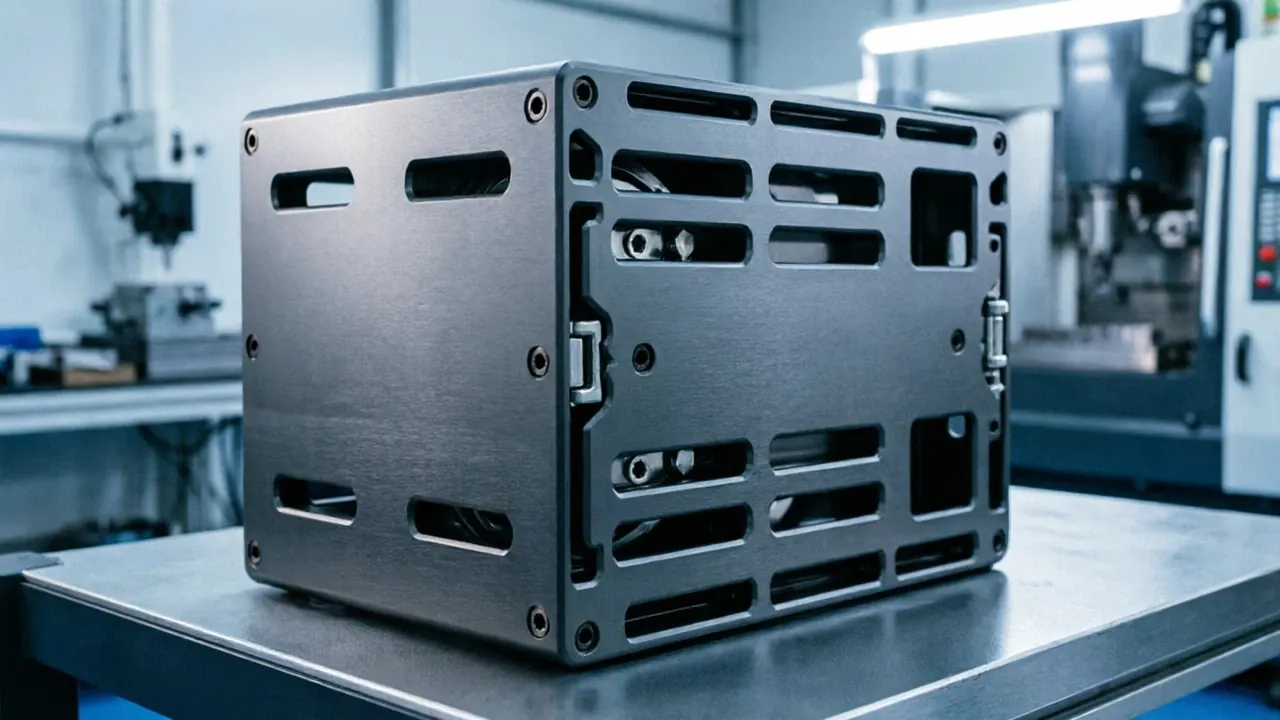
pdu housing machining case studyautomotive cnc machining case studycnc machine for automotive parts
PDU Housing Machining Case Study

Case Overview

Core project data for this machining case.

Industry Electric Vehicles
Product PDU Housing (Power Distribution Unit Housing)
Material Aluminum 6061-T6 / ADC12 / A380
Process Die Casting + CNC Machining + Surface Treatment
Machine Model HYR VMC850
Tolerance +/-0.01 mm
Surface Finish Ra0.8
Production Capacity Project based

Problem

Machining problem to solve

Complex automotive part geometry Tight tolerance control Stable batch production

Solution

HYR-CNC machining plan

The customer is an EV electrical system supplier manufacturing: High-voltage PDUs Battery junction boxes Electrical distribution modules HV switching boxes Their products are supplied to:

Machine Used

Recommended machine configuration

Machine: HYR CNC machining center selected according to part size, material and tolerance
Process: Rough machining, semi-finishing, finish machining and inspection based on the document case
Accuracy Control: Fixture planning, deformation control, stable toolpath strategy and CMM inspection
Cost Method: Published with existing website assets first to keep implementation cost low

Process

Timeline from raw material to inspection.

01 Typical manufacturing process:
02 Die Casting
03 Shot Blasting
04 Leak Test

Full Case Article

Machining background, difficulty and solution logic.

Quick Facts

Item Details Industry Electric Vehicles Product PDU Housing (Power Distribution Unit Housing) Material Aluminum 6061-T6 / ADC12 / A380 Manufacturing Process Die Casting + CNC Machining + Surface Treatment Machine HYR VMC850 Tolerance +/-0.01 mm Sealing Surface Flatness ≤0.03 mm Surface Finish Ra0.8 Protection Level IP67 / IP68 Application High Voltage EV Electrical Systems

Introduction

The Power Distribution Unit (PDU) is the central power management component of an electric vehicle.

Its function is similar to a distribution box in an industrial power system, but it operates under much more demanding conditions.

A PDU distributes high-voltage electricity from the battery pack to:

The PDU housing protects these sensitive electrical components from:

Modern electric vehicles require PDU housings that are:

Therefore, high-precision CNC machining is indispensable.

Electric motor Inverter Air conditioning compressor DC/DC converter On-board charger Auxiliary electrical systems Water Dust Electromagnetic interference Thermal expansion Mechanical vibration Lightweight Waterproof Corrosion resistant Dimensionally stable Electrically safe

Customer Background

The customer is an EV electrical system supplier manufacturing:

Their products are supplied to:

The customer encountered:

HYR CNC developed a dedicated machining solution optimized for aluminum electrical enclosures.

High-voltage PDUs Battery junction boxes Electrical distribution modules HV switching boxes Passenger EVs Electric SUVs Commercial EVs Hybrid vehicles Water leakage Deformed sealing surfaces Cable connector misalignment Thread burrs Poor assembly consistency

Industry Background

Electric vehicles are rapidly evolving.

Higher Voltage Platforms

The industry is transitioning from:

Higher voltage systems require:

As a result:

PDU housings require tighter machining tolerances.

400V 800V 1000V+ Better insulation Improved sealing More reliable electrical safety

More Compact Electrical Systems

Modern EVs integrate:

into smaller spaces.

Benefits:

However:

Machining complexity increases.

PDU BDU OBC DC/DC Current sensors Lower weight Reduced wiring Smaller battery packs

Waterproof Requirements

Most PDU housings require:

The sealing surface becomes the most critical machining area.

IP67 or IP68

Aluminum 6061-T6

Advantages:

Applications:

Excellent machinability Good strength Superior corrosion resistance Premium EVs Prototype projects Electrical enclosures

ADC12

Advantages:

Applications:

Excellent casting performance High production efficiency Stable dimensions Mass production Electrical housings Distribution boxes

A380

Advantages:

Applications:

Good strength Excellent die casting capability Cost-effective High-volume EV production Electrical systems Battery accessories

Manufacturing Process

Typical manufacturing process:

The sealing and connector interfaces determine the final product quality.

Die Casting Shot Blasting Leak Test Rough CNC Machining Semi Finishing Sealing Surface Machining Connector Port Machining Thread Hole Machining Deburring Anodizing Leak Testing Inspection Assembly

Why CNC Machining Is Necessary

Die casting cannot achieve:

Therefore:

Critical features must be machined.

Flat sealing surfaces Precise connector holes Thread accuracy Waterproof requirements

Sealing Surface

The housing cover uses:

Requirements:

Poor machining may result in:

Rubber gaskets Silicone seals Flatness ≤0.03 mm Surface Finish Ra0.8 Water ingress Electrical failure Corrosion

Connector Interfaces

The PDU contains:

Requirements:

Poor machining causes:

HV connectors Sensor connectors Grounding interfaces Tolerance +/-0.01 mm Connector misalignment Difficult assembly Seal failure

Thread Holes

PDU housings include:

Requirements:

Cover screws Grounding bolts Mounting holes Clean threads No burrs Accurate positions

1. Thin-Wall Structures

Typical wall thickness:

Challenges:

2 mm 4 mm Vibration Deformation Surface waviness

2. Large Sealing Surfaces

Requirements:

Challenges:

Flatness ≤0.03 mm Thermal expansion Cutting marks Dimensional stability

3. Multiple Connector Ports

A PDU housing may contain:

Challenges:

HV connectors Low-voltage ports Sensor holes Cable outlets Position accuracy Burr removal Seal integrity

HYR CNC Solution

HYR recommended the VMC850 Vertical Machining Center.

High-Speed Spindle

Spindle:

Advantages:

BT40 12000 rpm Excellent aluminum machining Better surface finish High productivity

High Rigidity Structure

Features:

Benefits:

Heavy cast iron bed Reinforced column Wide guideway spacing Better flatness Reduced vibration Stable precision

Precision Guideways

Advantages:

Suitable for:

High repeatability Excellent positioning Connector holes Sealing surfaces Thread holes

Automatic Tool Changer

24-tool ATC.

Supports:

Improving production efficiency.

Milling Drilling Tapping Chamfering

Step 1

Machine:

Remove casting allowance.

Rough Milling Structural surfaces Internal cavities

Step 2

Machine:

Prepare for finishing.

Semi Finishing Mounting features Internal interfaces

Step 3

Requirement:

Machine:

Sealing Surface Machining Flatness ≤0.03 mm Cover interfaces Gasket surfaces

Step 4

Machine:

Requirement:

Connector Port Machining HV ports Sensor interfaces Cable connectors +/-0.01 mm

Step 5

Machine:

Thread Hole Machining Grounding holes Cover screws Assembly interfaces

Step 6

Remove:

Improve sealing reliability.

Deburring Burrs Sharp edges

Step 7

Processes:

Improve:

Surface Treatment Sandblasting Anodizing Chromate coating Corrosion resistance Appearance Durability

Step 8

Requirement:

Guarantee waterproof performance.

Leak Testing IP67 IP68

Cutting Parameters

Typical machining parameters:

Item Value Spindle Speed 10000 rpm Feed Rate 2500 mm/min Tool Material Carbide Coolant Emulsion Depth of Cut 0.4 mm Surface Finish Ra0.8

Quality Inspection

Every PDU housing undergoes strict inspection.

Flatness Inspection

Requirement:

Inspect:

≤0.03 mm Sealing surfaces Connector interfaces

Hole Position Inspection

Requirement:

Inspect:

+/-0.01 mm Connector holes Mounting holes Thread holes

Leak Testing

Requirement:

Inspect:

IP67 IP68 Waterproof performance Air tightness Sealing reliability

CMM Inspection

Verify:

Ensuring complete dimensional accuracy.

Hole positions Flatness Geometric tolerances

Results

After adopting HYR CNC machining solutions:

The customer achieved:

Item Before After Surface Finish Ra1.6 Ra0.8 Flatness 0.07 mm 0.03 mm Leak Failure Rate 1.9% 0.1% Cycle Time 24 min 16 min Scrap Rate 2.8% 0.3% Better waterproof performance Improved electrical safety Higher assembly consistency Reduced manufacturing costs Increased production efficiency

HYR VMC850

Recommended for:

PDU Housings BDU Housings Electrical Enclosures

HYR VMC1060

Suitable for:

Battery Module Frames Cooling Plates Battery Accessories

HYR VMC1165

Ideal for:

Battery Trays Battery Enclosures Large EV Structural Parts

Related Articles

What Is CNC Milling?

BDU Housing Machining Case Study EV Battery Tray Machining Case Study Cooling Plate Machining Case Study Aluminum Machining Guide Surface Finish Explained

What is a PDU housing?

A PDU housing protects the Power Distribution Unit and distributes high-voltage electricity throughout an electric vehicle.

Which materials are commonly used?

Aluminum 6061-T6, ADC12 and A380 are widely used.

Why is CNC machining necessary?

Critical sealing surfaces, connector ports and thread holes require precision machining beyond die casting capabilities.

What sealing performance is required?

Most PDU housings require IP67 or IP68 waterproof protection.

Which CNC machine is recommended?

The HYR VMC850 is an excellent solution for machining PDU housings and EV electrical enclosures.

Conclusion

PDU housings are key electrical safety components in modern electric vehicles.

From sealing surfaces and connector ports to grounding interfaces and thread holes, every feature requires precision CNC machining.

With excellent aluminum machining capability, stable dimensional accuracy and high production efficiency, HYR CNC machining centers provide reliable and efficient solutions for PDU housing manufacturing.

HYR CNC continues to support global EV manufacturers with advanced machining technology and customized battery electrical system production solutions.

Result

Before and after machining improvement.

ItemBeforeAfter
Result 1Before optimizationAfter adopting HYR CNC machining solutions:
Result 2Before optimizationItem
Result 3Before optimizationBefore

FAQ

Common buyer questions for this case.

What is this case about?

This article covers pdu housing (power distribution unit housing) machining requirements, challenges, process planning and CNC machine selection.

Which machine is recommended?

The final machine should be selected according to part size, material, tolerance, cycle time and fixture plan.

Can HYR-CNC support similar parts?

Yes. Send drawings, material, tolerance and volume so HYR-CNC can recommend a suitable machining proposal.

Related Products

Related Articles

Similar Case Studies

More Automotive machining proof.

Request Quote

Need a similar CNC machining solution?

Send your drawing, material, tolerance, surface finish and production volume. HYR-CNC will recommend the right machine configuration and machining proposal.

Start Machine Selection

Related Links