HYR hyrcnc Intelligent CNC Solutions

Case Study

Automotive Case Study 11 / 20

Brake Caliper Machining Case Study

The brake caliper is one of the most important components in an automotive braking system.
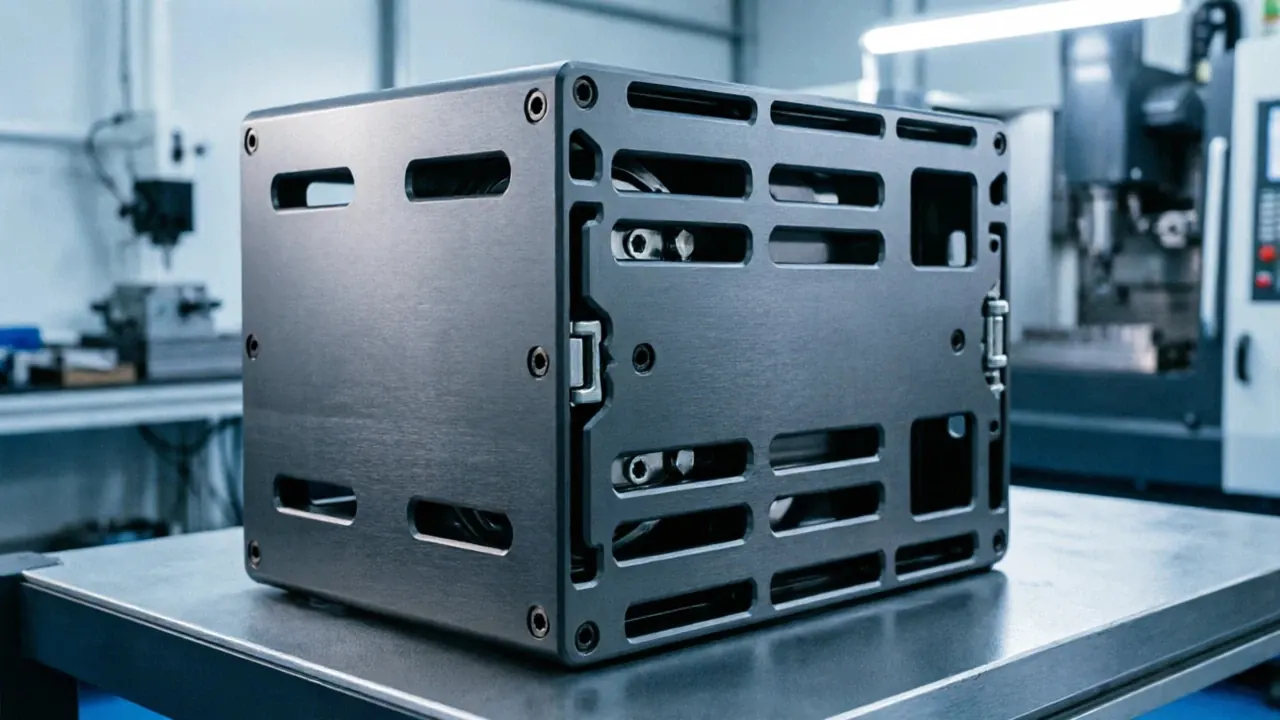
brake caliper machining case studyautomotive cnc machining case studycnc machine for automotive parts
Brake Caliper Machining Case Study

Case Overview

Core project data for this machining case.

Industry Automotive
Product Brake Caliper
Material Aluminum 6061-T6 / 7075-T6 / A356-T6
Process Forging / Casting + CNC Machining + Anodizing
Machine Model HYR VMC850
Tolerance +/-0.01 mm
Surface Finish Ra0.8
Production Capacity Project based

Problem

Machining problem to solve

Complex automotive part geometry Tight tolerance control Stable batch production

Solution

HYR-CNC machining plan

The customer is a braking system supplier producing: Fixed brake calipers Floating brake calipers Four-piston calipers Six-piston calipers Performance brake systems

Machine Used

Recommended machine configuration

Machine: HYR CNC machining center selected according to part size, material and tolerance
Process: Rough machining, semi-finishing, finish machining and inspection based on the document case
Accuracy Control: Fixture planning, deformation control, stable toolpath strategy and CMM inspection
Cost Method: Published with existing website assets first to keep implementation cost low

Process

Timeline from raw material to inspection.

01 Typical manufacturing process:
02 Forging / Casting
03 Heat Treatment
04 Shot Blasting

Full Case Article

Machining background, difficulty and solution logic.

Quick Facts

Item Details Industry Automotive Product Brake Caliper Material Aluminum 6061-T6 / 7075-T6 / A356-T6 Manufacturing Process Forging / Casting + CNC Machining + Anodizing Machine HYR VMC850 Tolerance +/-0.01 mm Piston Bore Accuracy ≤0.008 mm Surface Finish Ra0.8 Application Passenger Cars, EVs, SUVs, Sports Cars

Introduction

The brake caliper is one of the most important components in an automotive braking system.

Its function is to convert hydraulic pressure into clamping force by pushing brake pads against the brake disc.

A brake caliper consists of:

The machining quality of these features directly influences:

Modern vehicles increasingly adopt lightweight aluminum calipers with:

As a result, brake calipers have become one of the most demanding aluminum parts in automotive machining.

Piston bores Hydraulic oil channels Seal grooves Mounting brackets Bleeder ports Brake pad guides Braking force Pedal feel Hydraulic sealing Heat resistance Vehicle safety Multi-piston designs Monoblock structures High-pressure hydraulic systems

Customer Background

The customer is a braking system supplier producing:

Their products are supplied to:

The customer experienced:

HYR CNC designed a dedicated machining solution to improve accuracy and productivity.

Fixed brake calipers Floating brake calipers Four-piston calipers Six-piston calipers Performance brake systems Electric vehicles Luxury sedans Sports cars High-performance SUVs Piston bore leakage Hydraulic channel burrs Surface finish instability Seal groove deformation Low machining efficiency

Industry Background

The braking industry is moving toward:

Lightweight Aluminum Structures

Traditional:

Advantages:

Cast Iron Aluminum Alloy Weight reduction Improved heat dissipation Better corrosion resistance Reduced unsprung mass

Multi-Piston Systems

Modern brake systems adopt:

Benefits:

However:

Machining complexity increases significantly.

Four-piston calipers Six-piston calipers Eight-piston calipers Higher braking force Better heat distribution Improved pedal feel

Electric Vehicle Requirements

EVs require:

As a result:

High-precision aluminum calipers become mainstream.

Higher braking stability Better corrosion resistance Reduced brake noise Lightweight components

Aluminum 6061-T6

Advantages:

Applications:

Excellent machinability Good strength Superior corrosion resistance Passenger vehicles EVs SUVs

Aluminum 7075-T6

Advantages:

Applications:

Extremely high strength Excellent fatigue resistance Lightweight Racing calipers High-performance braking systems Sports cars

A356-T6

Advantages:

Applications:

Good castability Excellent thermal conductivity High production efficiency Mass production EV brake systems

Manufacturing Process

Typical manufacturing process:

Among all operations, piston bores and oil channels require the highest precision.

Forging / Casting Heat Treatment Shot Blasting Rough CNC Machining Semi Finishing Piston Bore Machining Oil Channel Machining Seal Groove Machining Thread Hole Machining Deburring Anodizing Leak Testing Inspection Assembly

Why CNC Machining Is Necessary

Brake calipers are hydraulic precision components.

Forging or casting alone cannot satisfy:

Bore accuracy Surface finish Hydraulic sealing Oil channel quality

Piston Bores

Brake pistons move inside:

Requirements:

Poor machining causes:

Piston Bore Roundness ≤0.008 mm Surface Finish Ra0.8 Hydraulic leakage Piston sticking Uneven braking

Hydraulic Oil Channels

Brake fluid flows through:

Requirements:

Any burrs may:

Cross-drilled holes Internal oil passages Thread ports Burr-free surfaces Smooth flow channels High sealing reliability Block oil flow Damage seals Cause brake failure

Seal Grooves

Seal grooves require:

Poor machining may cause:

Width Accuracy +/-0.01 mm Depth Accuracy +/-0.01 mm Oil leakage Seal failure Reduced service life

1. Deep Piston Bores

Typical bore depth:

Challenges:

Maintaining roundness is critical.

40 mm 90 mm Tool deflection Bore taper Surface scratches

2. Complex Oil Channels

Brake calipers contain:

Challenges:

Straight holes Angled holes Cross-drilled passages Burr removal Chip evacuation Tool interference

3. Thin-Wall Structures

Modern monoblock calipers have:

Challenges:

Machining parameters must be optimized carefully.

Wall Thickness 3 mm 6 mm Vibration Deformation Chatter

HYR CNC Solution

HYR recommended the VMC850 Vertical Machining Center.

High-Speed Spindle

Spindle:

Advantages:

BT40 12000 rpm Excellent aluminum machining Better bore quality Stable cutting performance

High Rigidity Structure

Features:

Benefits:

Heavy cast iron bed Reinforced column Wide guideway spacing Reduced vibration Better surface finish Improved dimensional stability

Precision Guideways

Advantages:

Suitable for:

High repeatability Smooth movement Stable positioning Piston bores Seal grooves Hydraulic ports

Automatic Tool Changer

24-tool ATC.

Supports:

Improving production efficiency.

Milling Boring Reaming Tapping Chamfering

Step 1

Machine:

Remove excess material.

Rough Milling Structural surfaces Outer profiles

Step 2

Machine:

Prepare for finishing.

Semi Finishing Mounting surfaces Brake pad guides

Step 3

Machine:

Requirement:

Piston Bore Machining Piston bores Roundness ≤0.008 mm

Step 4

Machine:

Remove all burrs.

Oil Channel Machining Internal oil passages Cross-drilled holes Hydraulic ports

Step 5

Machine:

Requirement:

Seal Groove Machining Seal grooves +/-0.01 mm

Step 6

Machine:

Thread Hole Machining Bleeder holes Oil ports Mounting holes

Step 7

Remove:

Improve hydraulic reliability.

Deburring Internal burrs Sharp edges

Step 8

Benefits:

Anodizing Improved corrosion resistance Better appearance Increased wear resistance

Step 9

Requirement:

Guarantee hydraulic safety.

Leak Testing No Leakage 100%

Cutting Parameters

Typical machining parameters:

Item Value Spindle Speed 10000 rpm Feed Rate 2200 mm/min Tool Material Carbide Coolant Emulsion Depth of Cut 0.4 mm Surface Finish Ra0.8

Quality Inspection

Every brake caliper undergoes strict inspection.

Piston Bore Inspection

Requirement:

Inspect:

Roundness ≤0.008 mm Roundness Cylindricity Surface finish

Seal Groove Inspection

Requirement:

Inspect:

+/-0.01 mm Width Depth Surface quality

Leak Testing

Requirement:

Inspect:

100% No Leakage Hydraulic sealing Oil channels Thread interfaces

CMM Inspection

Verify:

Ensuring complete dimensional accuracy.

Hole positions Bore accuracy Geometric tolerances

Results

After adopting HYR CNC machining solutions:

The customer achieved:

Item Before After Bore Roundness 0.02 mm 0.008 mm Surface Finish Ra1.6 Ra0.8 Leak Failure Rate 1.8% 0.1% Cycle Time 28 min 18 min Scrap Rate 2.3% 0.4% Better braking performance Improved hydraulic sealing Reduced brake noise Higher production efficiency Lower manufacturing costs

HYR VMC850

Recommended for:

Brake Calipers Brake Discs Steering Knuckles

HYR VMC1060

Suitable for:

Control Arms Suspension Components Aluminum Structural Parts

HYR VMC1165

Ideal for:

Subframes E-Axle Housings Large EV Components

Related Articles

What Is CNC Milling?

Brake Disc Machining Case Study Steering Knuckle Machining Case Study Aluminum Machining Guide Surface Finish Explained

What materials are commonly used for brake calipers?

Aluminum 6061-T6, 7075-T6 and A356-T6 are widely used due to their lightweight properties and excellent machinability.

Why is CNC machining necessary?

Critical features such as piston bores, seal grooves and hydraulic oil channels require precision machining beyond forging or casting capabilities.

What piston bore accuracy is required?

Most brake calipers require bore roundness of 0.008 mm or better.

Why is anodizing used?

Anodizing improves corrosion resistance, wear resistance and surface appearance.

Which CNC machine is recommended?

The HYR VMC850 is an excellent solution for machining aluminum brake calipers and braking system components.

Conclusion

Brake calipers are precision hydraulic components that directly affect vehicle braking performance and safety.

From piston bores and hydraulic oil channels to seal grooves and mounting interfaces, every critical feature depends on precision CNC machining.

With excellent aluminum machining capability, stable bore accuracy and high productivity, HYR CNC machining centers provide reliable and efficient solutions for brake caliper manufacturing.

HYR CNC continues to support global automotive manufacturers with advanced machining technology and customized braking system production solutions.

Result

Before and after machining improvement.

ItemBeforeAfter
Result 1Before optimizationAfter adopting HYR CNC machining solutions:
Result 2Before optimizationItem
Result 3Before optimizationBefore

FAQ

Common buyer questions for this case.

What is this case about?

This article covers brake caliper machining requirements, challenges, process planning and CNC machine selection.

Which machine is recommended?

The final machine should be selected according to part size, material, tolerance, cycle time and fixture plan.

Can HYR-CNC support similar parts?

Yes. Send drawings, material, tolerance and volume so HYR-CNC can recommend a suitable machining proposal.

Related Products

Related Articles

Similar Case Studies

More Automotive machining proof.

Request Quote

Need a similar CNC machining solution?

Send your drawing, material, tolerance, surface finish and production volume. HYR-CNC will recommend the right machine configuration and machining proposal.

Start Machine Selection

Related Links