HYR hyrcnc Intelligent CNC Solutions

Case Study

Mold & Die Case Study 03 / 15

Die Casting Mold Machining Case Study

Die casting is one of the most important manufacturing processes in modern automotive and electric vehicle production.
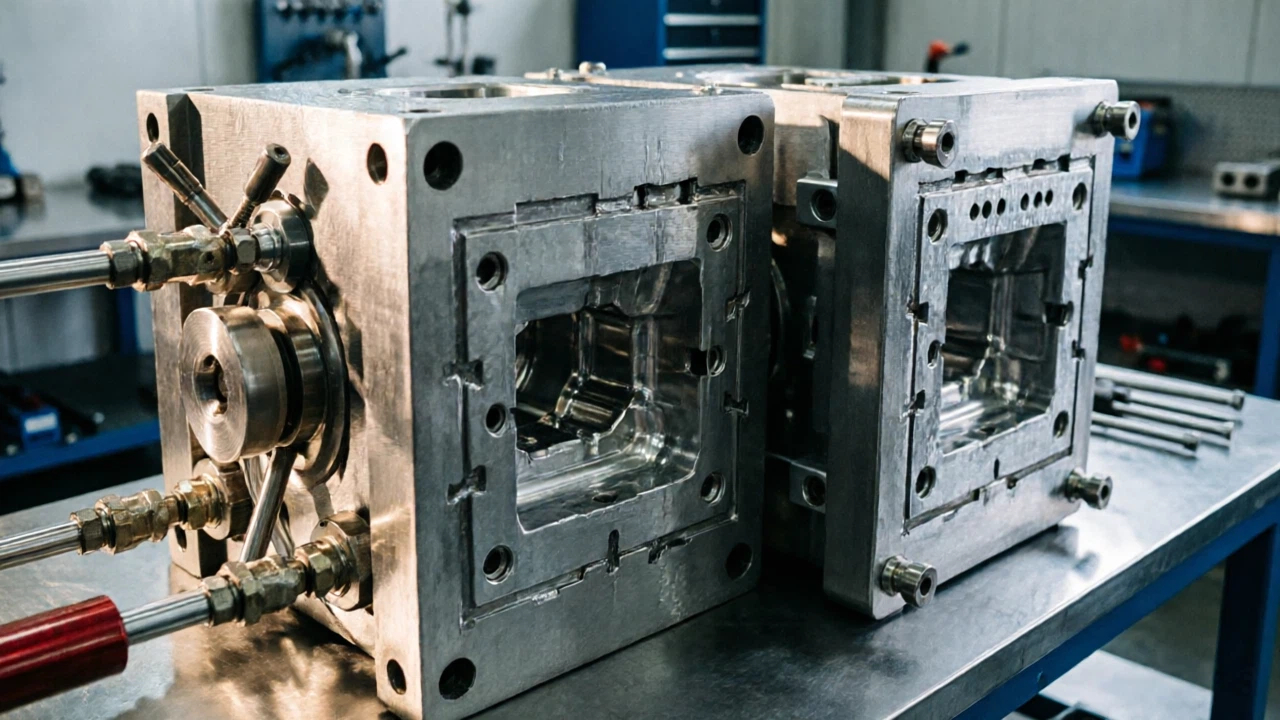
die casting mold machining case studymold die cnc machiningcnc machine for mold manufacturing
Die Casting Mold Machining Case Study

Project Overview

Standard case data fields.

Industry Mold & Die / Automotive / EV
Product Die Casting Mold
Material H13 / SKD61 / Dievar / 1.2344
Process CNC Milling + EDM + Heat Treatment + Grinding
Machine Model HYR VMC1060 / VMC1165
Tolerance +/-0.005 mm
Surface Finish Ra0.4-0.8
Application EV Battery Tray / Motor Housing / Structural Casting

Customer Requirements

What the customer needed

The customer is a Tier-1 EV supplier producing: EV battery tray systems Electric drive motor housings Power electronics housings Lightweight structural castings Annual production:

Challenges

Machining difficulty

Die casting molds operate under extreme conditions: High Temperature+High Pressure+Molten Metal Impact+Thermal Cycling Because it involves high thermal load, erosion, and complex cavity structures.

HYR CNC Solution

Machine configuration

Machine: HYR VMC or gantry CNC system selected according to mold size, steel hardness and accuracy target
Process: Rough machining, stress relief, semi-finishing, EDM support, polishing preparation and inspection
Accuracy Control: Thermal stability, fixture rigidity, finishing allowance control and CMM inspection
Cost Method: Published with existing website assets first to keep implementation cost low

Machining Process

Timeline from raw material to inspection.

01 Material preparation
02 Rough machining
03 Stress relief
04 Finish machining
05 Inspection

Full Case Article

Machining background, difficulty and solution logic.

Quick Facts

Item

Details

Industry Mold & Die / Automotive / EV Product Die Casting Mold Materials H13 / SKD61 / Dievar / 1.2344 Process CNC Milling + EDM + Heat Treatment + Grinding Machine HYR VMC1060 / VMC1165 Tolerance +/-0.005 mm Surface Finish Ra0.4-0.8 Application EV Battery Tray / Motor Housing / Structural Casting

Introduction

Die casting is one of the most important manufacturing processes in modern automotive and electric vehicle production.

It is widely used for producing: EV battery trays Motor housings Inverter housings E-axle structures Structural aluminum frames The die casting mold is the core tool that determines: Casting QualityDimensional AccuracySurface IntegrityProduction Efficiency In the EV industry: Die Casting Mold=Mass Production Foundation

What Is A Die Casting Mold?

A die casting mold is a precision steel tool used to inject molten aluminum or zinc alloy under high pressure into a cavity.

Basic structure: Mold BaseFixed Die (Cavity Side)Moving Die (Core Side)Cooling SystemEjection System Process: Molten AluminumHigh Pressure InjectionRapid CoolingSolidificationDie Cast Part

Customer Background

HYR CNC provided a full die casting mold machining solution.

The customer is a Tier-1 EV supplier producing: EV battery tray systems Electric drive motor housings Power electronics housings Lightweight structural castings Annual production: 50,000+ sets of die casting components Main challenges: High thermal load Extreme wear resistance requirements Large cavity machining Cooling efficiency optimization Tight dimensional control

Why Die Casting Mold Machining Is Extremely Difficult

Die casting molds operate under extreme conditions: High Temperature+High Pressure+Molten Metal Impact+Thermal Cycling

Challenge 1

Extreme Thermal Load During production: 700 degreesC AluminumMold Surface HeatingThermal Fatigue Result: Cracking risk Surface degradation Dimensional drift

Challenge 2

Erosion And Wear High-speed molten metal causes: Surface ErosionCavity WearReduced Mold Life

Challenge 3

This increases machining difficulty significantly.

Large Structural Cavities EV components require: Large battery tray cavities Deep ribs Thin-wall structures

Challenge 4

Cooling Channel Complexity Cooling system must control: Thermal BalanceCycle TimeCasting Quality Cooling channels are: Deep 3D curved High density layout

Cavity (Fixed Side)

Function: Outer Shape Formation Requirements: High wear resistance Mirror surface finish

Core (Moving Side)

Function: Internal Geometry Formation Requires: High precision Structural rigidity

Mold Insert

Function: Replaceable Wear Area Benefit: Maintenance cost reduction Flexible design

Ejection System

Function: Part Release Mechanism Requires: Precision alignment Smooth movement

H13 Steel (Most Common)

Advantages: High HardnessThermal Fatigue ResistanceWear Resistance Applications: EV die casting molds Automotive structural parts

SKD61

Advantages: Good ToughnessHeat Resistance Applications: Medium load die casting molds

Dievar Steel

Advantages: Premium Hot Work SteelLong Mold Life Applications: High-end EV structural casting molds

HYR VMC1060

Best for: Medium die casting molds EV housing molds Advantages: Stability Precision

HYR VMC1165

Best for: Large battery tray molds Structural casting molds Advantages: Large travel Heavy cutting capability

Step 1

Raw Material Preparation Forged tool steel blocks Pre-hardened steel

Step 2

Rough Machining Remove: 70-85% Material Create: Basic cavity Structural framework

Step 3

Stress Relief Treatment Reduce: Internal StressDeformation Risk

Step 4

Semi-Finishing Core shaping Cavity profiling Cooling channel preparation

Step 5

EDM Electrode Machining Used for: Deep ribs Sharp internal corners Complex geometries

Step 6

EDM Die Sinking Final cavity forming High precision detailing

Step 7

Finish Machining Requirement: +/-0.005 mmRa0.4

Step 8

Surface Treatment Nitriding Coating (PVD) Heat treatment

CMM Inspection

Checks: Cavity geometry Core alignment Cooling channel position

Surface Hardness Test

Ensures: Thermal resistance Wear resistance

Surface Finish Test

Requirement: Ra0.4-0.8

Mold Trial

Validates: Casting quality Shrinkage control Dimensional accuracy

Results

Item

After HYR CNC implementation: Before After Machining Time 100% -32% Accuracy +/-0.015 mm +/-0.005 mm Mold Life Baseline +40% Scrap Rate 2.5% 0.3% Cooling Efficiency Standard +25%

Impact On EV Industry

This die casting mold directly supports: EV Battery Tray production Lightweight chassis systems Motor housing manufacturing Inverter structural design

HYR VMC1060

Standard EV die casting molds

HYR VMC1165

Large battery tray molds & structural molds

Related Articles

Injection Mold Machining Case Study Automotive Mold Machining Case Study EV Battery Tray Machining Case Study Motor Housing Machining Case Study Inverter Housing Machining Case Study

What is a die casting mold?

A tool used to produce metal parts by injecting molten aluminum or zinc under high pressure.

Why is die casting mold machining difficult?

Because it involves high thermal load, erosion, and complex cavity structures.

What materials are used?

H13, SKD61, Dievar are most common.

Where is it used?

Mainly in EV and automotive structural components.

What tolerance is required?

Typically: +/-0.005 mm

Conclusion

Die casting molds are the backbone of modern EV and automotive structural manufacturing.

They operate under extreme thermal and mechanical conditions, requiring highly precise CNC machining and robust material selection.

With advanced machining capability and EV industry experience, HYR CNC delivers reliable die casting mold solutions for global automotive manufacturers.

Results

Before and after machining improvement.

ItemBeforeAfter
Result 1Before optimizationAfter HYR CNC implementation:
Result 2Before optimizationMachining Time
Result 3Before optimization100%

FAQ

Common buyer questions for this case.

What is this mold case about?

This page covers die casting mold requirements, machining difficulty, process planning and machine selection.

Which machines are recommended?

HYR VMC850, VMC1060, VMC1165 and gantry CNC systems are selected according to mold size and machining difficulty.

Can HYR-CNC support similar mold projects?

Yes. Send drawings, mold steel, tolerance, surface finish and mold size for a suitable machining proposal.

Recommended Machines

Related Articles

Similar Case Studies

More Mold & Die machining proof.

Mold SEO Cluster

Related mold manufacturing resources.

Automatic internal links connect this case study with the Mold & Die hub, related case studies and core technical articles.

Request Quote

Need a similar CNC machining solution?

Send your drawing, material, tolerance, surface finish and production volume. HYR-CNC will recommend the right machine configuration and machining proposal.

Start Machine Selection

Related Links