HYR hyrcnc Intelligent CNC Solutions

Case Study

Aerospace Case Study 02 / 15

Wing Rib Machining Case Study

A wing rib is one of the most important structural components inside an aircraft wing.
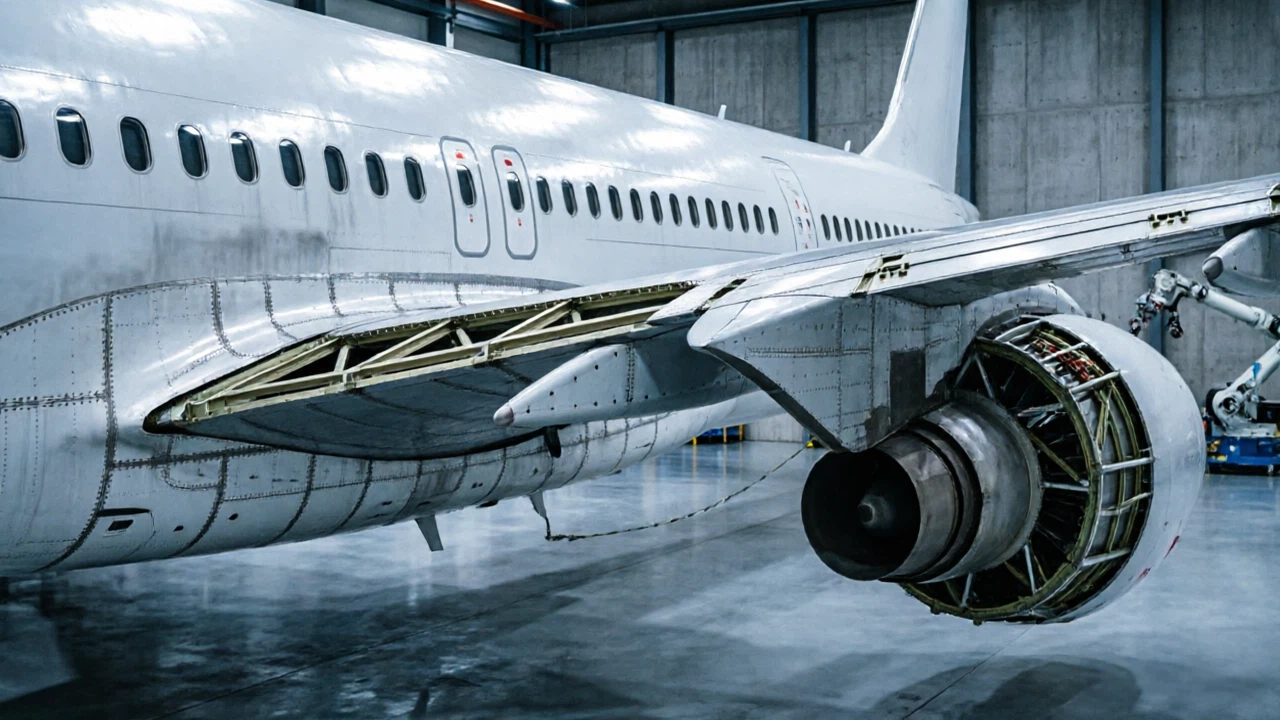
wing rib machining case studyaerospace cnc machining5 axis aerospace machining
Wing Rib Machining Case Study

Project Overview

Standard case data fields.

Industry Aerospace
Product Wing Rib
Material 7050-T7451 / 7075-T651 Aluminum
Process Forging + Heat Treatment + 5 Axis CNC Machining
Machine Model HYR VMC1165 / 5 Axis Machining Center
Tolerance +/-0.005 mm
Surface Finish Ra0.4
Application Commercial Aircraft / Military Aircraft / UAV

Customer Requirements

What the customer needed

The customer is an aerospace supplier producing: Main wing ribs Trailing edge ribs Fuel tank ribs UAV wing ribs Materials:

Challenges

Machining difficulty

Wing ribs are famous for: Large Size+Thin Wall+High Material Removal+Tight Tolerance These four characteristics make wing ribs one of the most difficult aerospace parts to machine. Traditional machining: Setup 1Setup 2Setup 3Setup 4 Problems:

HYR CNC Solution

Machine configuration

Machine: HYR CNC machining center selected according to aerospace material, part size and tolerance
Process: Rough machining, semi-finishing, 5-axis finishing and inspection based on the document content
Accuracy Control: Rigid fixturing, thermal stability, deformation control and CMM inspection
Cost Method: Published with existing website assets first to keep implementation cost low

Machining Process

Timeline from raw material to inspection.

01 Material preparation
02 Rough machining
03 Semi-finishing
04 5-axis finishing
05 Inspection

Full Case Article

Machining background, difficulty and solution logic.

Quick Facts

Item

Details

Industry Aerospace Product Wing Rib Material 7050-T7451 / 7075-T651 Aluminum Manufacturing Process Forging + Heat Treatment + 5 Axis CNC Machining Machine HYR VMC1165 / 5 Axis Machining Center Tolerance +/-0.005 mm Wall Thickness 0.8~3 mm Surface Finish Ra0.4 Application Commercial Aircraft / Military Aircraft / UAV

Introduction

A wing rib is one of the most important structural components inside an aircraft wing.

Every modern aircraft contains dozens or even hundreds of wing ribs.

Its primary functions are: Maintaining wing aerodynamic shape Supporting skin panels Distributing aerodynamic loads Transferring loads to spars Improving torsional rigidity Although hidden inside the wing, wing ribs determine: Wing StrengthFlight SafetyAircraft WeightFuel Efficiency Typical quantities: Aircraft Type Number of Wing Ribs Regional Jet 40~80 Narrow Body Aircraft 80~150 Wide Body Aircraft 150~250 Military Aircraft 100+ UAV 10~50

What Does A Wing Rib Look Like?

Wing ribs are arranged along the span of the wing.

Aircraft wings could easily twist or collapse.

Most people imagine a wing as: Skin+Spars=Wing But internally: Wing Skin──────────Wing Rib│Wing Spar──────────Wing Rib│Wing Spar They: Define wing shape Connect upper and lower skins Transfer aerodynamic forces Resist deformation Without wing ribs:

Customer Background

HYR CNC developed a dedicated wing rib machining solution.

The customer is an aerospace supplier producing: Main wing ribs Trailing edge ribs Fuel tank ribs UAV wing ribs Materials: 7050-T74517075-T6512024-T351 Main challenges: Thin wall deformation Large material removal Surface vibration Long cycle times Tight dimensional tolerances

Why Wing Rib Machining Is Difficult

These four characteristics make wing ribs one of the most difficult aerospace parts to machine.

Wing ribs are famous for: Large Size+Thin Wall+High Material Removal+Tight Tolerance

Challenge 1

The machine must remove massive amounts of material without causing deformation.

Large Material Removal A wing rib usually starts as: 100 kgForging8 kgFinished Part Material removal: 90%95% That means:

Challenge 2

Ultra-Thin Walls Typical wall thickness: 0.8 mm3 mm Some UAV ribs: 0.5 mm Problems: Chatter Deformation Residual stress Surface vibration marks

Challenge 3

Tool vibration becomes a major issue.

Large Pocket Structures Wing ribs contain: Weight reduction pockets Lightening holes Reinforcement ribs Example: Large PocketThin FloorThin WallComplex Contour

Challenge 4

Aluminum expands rapidly.

Temperature control is extremely important.

Thermal Deformation During machining: Cutting HeatMaterial ExpansionDimensional VariationAccuracy Loss Therefore:

7050-T7451

One of the most widely used aerospace materials.

Advantages: High StrengthExcellent Fracture ToughnessSuperior Corrosion Resistance Applications: Main wing ribs Wing spars Bulkheads

7075-T651

Known as: Aircraft Grade Aluminum Advantages: Excellent machinability High strength Lightweight Applications: UAV structures Wing ribs Structural brackets

2024-T351

Advantages: Excellent fatigue resistance Good toughness Applications: Secondary wing structures Fuselage frames

Why 5 Axis Machining Is Necessary

Traditional machining: Setup 1Setup 2Setup 3Setup 4 Problems: Longer cycle times Lower accuracy Positioning errors Modern aerospace manufacturing adopts: 5 Axis CNCOne SetupMulti Surface MachiningHigher Accuracy Benefits: Fewer setups Better dimensional stability Improved surface quality Shorter cycle times

HYR CNC Solution

HYR recommends:

VMC1165

Suitable for: Medium wing ribs UAV structures Travel: 1100 × 650 × 650 mm Advantages: Excellent aluminum machining Stable structure High efficiency

5 Axis Machining Center

Suitable for: Large Wing RibsComplex ProfilesThin Wall Structures Advantages: Multi-angle machining Reduced setups Better surface quality

Step 1

Forging Produce: Near-net shape blanks Optimized grain flow

Step 2

Heat Treatment Improve: Strength Fatigue resistance

Step 3

Rough Machining Remove: 70%85%Material Machine: Large pockets External profiles Reference surfaces

Step 4

Improve dimensional stability.

Stress Relief Reduce: Residual stress Thermal deformation

Step 5

Prepare for finishing.

Semi Finishing Machine: Thin walls Weight reduction areas

Step 6

Finish Machining Requirement: Tolerance+/-0.005 mmRa0.4 Machine: Thin ribs Hole positions Interfaces

Step 7

Improve assembly safety.

Deburring Remove: Burrs Sharp edges

Step 8

Guaranteeing aerospace quality.

CMM Inspection Requirement: 100%Inspection Verify: Profiles Hole positions Surface flatness

Cutting Parameters

Item

Value Spindle Speed 12000 rpm Feed Rate 3000 mm/min Tool Material Carbide Coolant High Pressure Depth of Cut 0.5 mm Surface Finish Ra0.4

Quality Inspection

Every wing rib undergoes strict inspection.

Profile Inspection

Requirement: +/-0.005 mm Inspect: Profiles Curves Contours

Thin Wall Inspection

Requirement: 0.8 mm3 mm Inspect: Thickness Flatness Deformation

Surface Finish

Requirement: Ra0.4 Inspect: Roughness Tool marks Surface waviness

CMM Inspection

Ensuring full compliance with aerospace standards.

Verify: Hole positions Pocket geometry Overall dimensions

Results

Item

After adopting HYR CNC machining solutions: Before After Surface Finish Ra0.8 Ra0.4 Dimensional Accuracy +/-0.015 mm +/-0.005 mm Cycle Time 240 min 170 min Scrap Rate 2.2% 0.2% Material Utilization 83% 92% The customer achieved: Better dimensional stability Improved structural performance Reduced machining time Lower production costs Greater manufacturing consistency

Related Articles

What Is 5 Axis CNC Machining?

Aircraft Structural Part Machining Case Study Bulkhead Machining Case Study Fuselage Frame Machining Case Study Titanium Machining Case Study Thin Wall Aerospace Part Machining

What is a wing rib?

A wing rib is an internal aircraft structural component that maintains wing shape and transfers aerodynamic loads.

Which materials are commonly used?

7050-T7451, 7075-T651 and 2024-T351 aluminum alloys are widely used.

Why are wing ribs difficult to machine?

Because they feature: Thin walls Large pockets High material removal Tight tolerances

Why is 5 axis machining preferred?

5-axis machining reduces setups, improves accuracy and enables complex surface machining in a single operation.

What tolerance is required?

or better.

Most aerospace wing ribs require: +/-0.005 mm

Conclusion

Wing ribs are among the most important structural components in aircraft manufacturing.

Their lightweight design, thin wall structures and complex geometries require advanced CNC machining technologies.

With excellent aluminum machining capability, stable dimensional accuracy and aerospace-grade machining solutions, HYR CNC machining centers provide reliable and efficient solutions for wing rib manufacturing.

HYR CNC continues to support global aerospace manufacturers with advanced machining technology and customized aircraft structural production solutions.

Results

Before and after machining improvement.

ItemBeforeAfter
Result 1Before optimizationAfter adopting HYR CNC machining solutions:
Result 2Before optimizationSurface Finish
Result 3Before optimizationRa0.8

FAQ

Common buyer questions for this case.

What is this aerospace article about?

This page covers wing rib requirements, machining difficulty, process planning and machine selection.

Which machines are recommended?

HYR VMC, HMC and 5-axis machining centers are selected according to material, size, tolerance and contour complexity.

Can HYR-CNC support similar aerospace parts?

Yes. Send drawings, material, tolerance and production volume for a suitable machining proposal.

Recommended Machines

Related Articles

Similar Case Studies

More Aerospace machining proof.

Request Quote

Need a similar CNC machining solution?

Send your drawing, material, tolerance, surface finish and production volume. HYR-CNC will recommend the right machine configuration and machining proposal.

Start Machine Selection

Related Links