HYR hyrcnc Intelligent CNC Solutions

Case Study

Aerospace Case Study 04 / 15

Fuselage Frame Machining Case Study

The fuselage frame is one of the primary structural components of an aircraft.
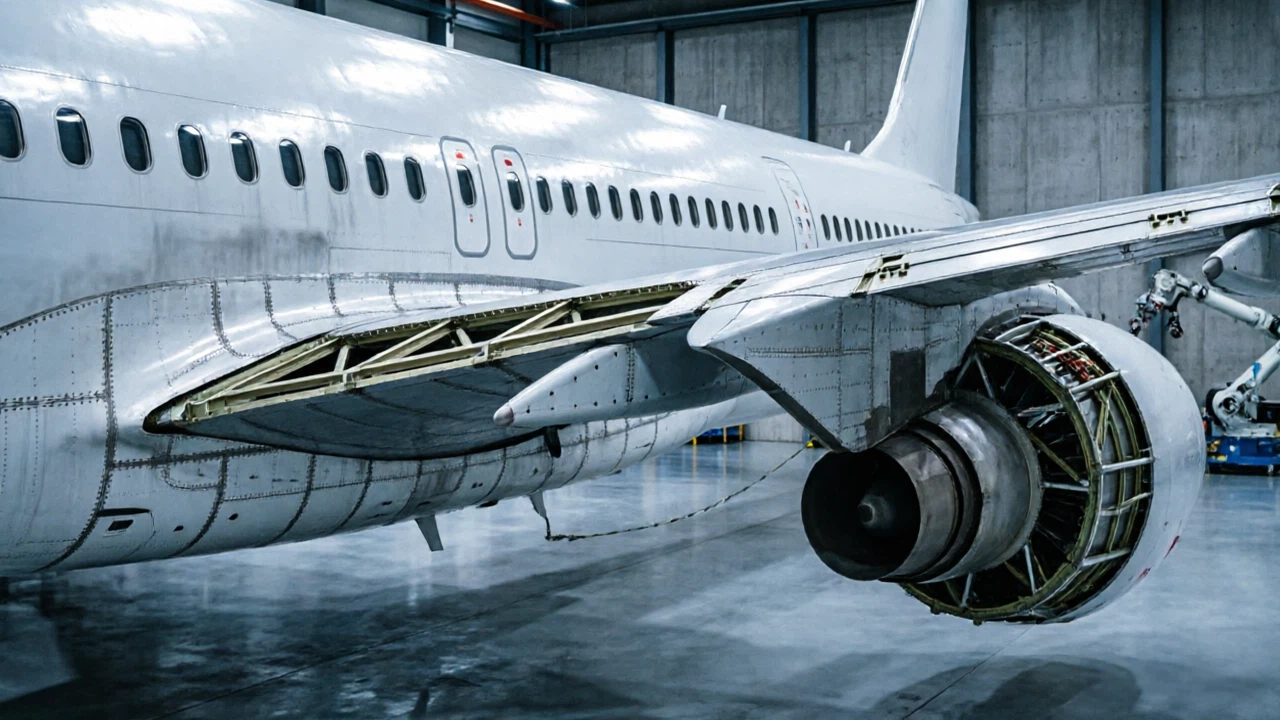
fuselage frame machining case studyaerospace cnc machining5 axis aerospace machining
Fuselage Frame Machining Case Study

Project Overview

Standard case data fields.

Industry Aerospace
Product Aircraft Fuselage Frame
Material 7050-T7451 / 7075-T651 / Ti-6Al-4V
Process Forging + Heat Treatment + 5 Axis CNC Machining
Machine Model HYR VMC1165 / 5 Axis Machining Center
Tolerance +/-0.005 mm
Surface Finish Ra0.4
Application Commercial Aircraft / Military Aircraft / UAV

Customer Requirements

What the customer needed

The customer manufactures: Passenger aircraft fuselage frames Cargo aircraft structures UAV fuselage frames Military aircraft ring frames Annual production:

Challenges

Machining difficulty

Traditional machining: SetupRotateSetupRotateSetup Problems: Positioning errors Long cycle times Lower accuracy

HYR CNC Solution

Machine configuration

Machine: HYR CNC machining center selected according to aerospace material, part size and tolerance
Process: Rough machining, semi-finishing, 5-axis finishing and inspection based on the document content
Accuracy Control: Rigid fixturing, thermal stability, deformation control and CMM inspection
Cost Method: Published with existing website assets first to keep implementation cost low

Machining Process

Timeline from raw material to inspection.

01 Material preparation
02 Rough machining
03 Semi-finishing
04 5-axis finishing
05 Inspection

Full Case Article

Machining background, difficulty and solution logic.

Quick Facts

Item

Details

Industry Aerospace Product Aircraft Fuselage Frame Materials 7050-T7451 / 7075-T651 / Ti-6Al-4V Manufacturing Process Forging + Heat Treatment + 5 Axis CNC Machining Machine HYR VMC1165 / 5 Axis Machining Center Tolerance +/-0.005 mm Diameter 500 ~ 4000 mm Surface Finish Ra0.4 Application Commercial Aircraft / Military Aircraft / UAV

Introduction

The fuselage frame is one of the primary structural components of an aircraft.

It forms the circular skeleton of the fuselage and provides: Structural rigidity Cabin shape stability Load distribution Skin support Door and window reinforcement Cabin pressure resistance A typical aircraft fuselage contains: DozensHundredsEven Thousandsof Frames Together, they create: Aircraft Skin+Frames+Bulkheads+Stringers=Aircraft Fuselage Without fuselage frames: The aircraft body would not be able to maintain its shape during: Takeoff High altitude flight Turbulence Landing

What Does A Fuselage Frame Look Like?

Installed along the longitudinal direction of the aircraft.

Extremely difficult to machine.

A fuselage frame is generally: CircularorSemi-CircularRing Structure Typical diameter: 500 mm1500 mm4000 mm Wall thickness: 1 mm5 mm Large aircraft frames: Diameter>3000 mmWall Thicknessā‰ˆ1~2 mm This makes them: Large Size+Thin Wall+Complex Curves+High Accuracy

Customer Background

HYR CNC developed a dedicated aerospace machining solution.

The customer manufactures: Passenger aircraft fuselage frames Cargo aircraft structures UAV fuselage frames Military aircraft ring frames Annual production: 60,000+Fuselage Frames Materials: 7050-T74517075-T651Ti-6Al-4V Main challenges: Thin wall deformation Large ring distortion Surface vibration marks Long machining cycles Tight profile tolerances

Aircraft Fuselage Structure

Modern aircraft fuselage structures consist of: Skin+Frames+Stringers+Bulkheads

Skin

Function: Maintain aerodynamic shape Transfer external loads Materials: Aluminum alloy Carbon fiber

Stringers

Function: Longitudinal Reinforcement Prevent: Buckling Deformation

Bulkheads

Function: Separate aircraft sections Resist pressure loads

Frames

Function: Maintain ShapeTransfer LoadsSupport SkinIncrease Rigidity Frames and bulkheads together create: Aircraft Skeleton

7050-T7451

The most common aerospace structural material.

Advantages: High StrengthExcellent Fracture ToughnessStress Corrosion Resistance Applications: Main fuselage frames Pressure structures

7075-T651

Known as: Aircraft Grade Aluminum Advantages: High strength Lightweight Excellent machinability Applications: UAV frames Secondary structures

Ti-6Al-4V

Applications: Military aircraft Spacecraft High load structures Advantages: High StrengthLow DensityCorrosion Resistance Challenges: Poor Thermal ConductivityHigh Cutting TemperatureRapid Tool Wear

Challenge 1

Large Diameter Structures Typical diameter: 500 mm2000 mm4000 mm Challenges: Thermal expansion Positioning accuracy Machine travel

Challenge 2

Thin Wall Deformation Typical wall thickness: 1 mm3 mm Thin walls easily suffer: Vibration Chatter Elastic deformation Profile distortion

Challenge 3

Complex Curves Frames usually contain: Circular arcs Reinforcement ribs Lightening pockets Curved surfaces Typical geometry: Curved SurfaceThin WallPocketComplex Profile This creates: Tool interference Vibration Difficult chip evacuation

Challenge 4

Stress relief strategies are essential.

Residual Stress Large aluminum forgings often contain: Residual StressRelease During CuttingPart DistortionDimensional Errors Therefore:

Why 5 Axis Machining Is Necessary

Traditional machining: SetupRotateSetupRotateSetup Problems: Positioning errors Long cycle times Lower accuracy Modern aerospace machining: 5 Axis CNCOne SetupComplete Machining Benefits: Better profile accuracy Improved surface quality Reduced machining time Greater dimensional consistency

HYR CNC Solution

HYR recommends:

HYR VMC1165

Suitable for: Medium fuselage frames Aluminum structures Travel: 1100 Ɨ 650 Ɨ 650 mm Advantages: Excellent rigidity Stable cutting High precision

5 Axis Machining Center

Suitable for: Large FramesComplex CurvesTitanium Structures Advantages: Multi-angle machining Better profile accuracy Fewer setups

Step 1

Forging Produce: Near-net shape blanks Optimized grain flow

Step 2

Heat Treatment Improve: Strength Fatigue resistance

Step 3

Rough Machining Remove: 70%85%Material Machine: Large pockets External profiles Internal cavities

Step 4

Improve dimensional stability.

Stress Relief Reduce: Residual stress Thermal deformation

Step 5

Prepare for finishing.

Semi Finishing Machine: Thin walls Reinforcement ribs

Step 6

Finish Machining Requirements: Tolerance+/-0.005 mmRa0.4 Machine: Profiles Interfaces Hole positions

Step 7

Improve assembly safety.

Deburring Remove: Burrs Sharp edges

Step 8

Guaranteeing aerospace quality.

CMM Inspection Requirement: 100%Inspection Verify: Profile geometry Circularity Hole positions

Quality Inspection

Every fuselage frame undergoes strict inspection.

Profile Inspection

Requirement: +/-0.005 mm Inspect: Circular profiles Curved surfaces Geometric tolerances

Thin Wall Inspection

Requirement: 1 mm5 mm Inspect: Thickness Flatness Deformation

Surface Finish

Requirement: Ra0.4 Inspect: Roughness Tool marks Surface waviness

Material Certification

Ensuring complete traceability.

Verify: Chemical composition Heat treatment Mechanical properties

Results

Item

After adopting HYR CNC machining solutions: Before After Surface Finish Ra0.8 Ra0.4 Dimensional Accuracy +/-0.015 mm +/-0.005 mm Cycle Time 260 min 185 min Scrap Rate 2.1% 0.2% Material Utilization 85% 92% The customer achieved: Better profile accuracy Improved structural performance Reduced machining time Lower manufacturing costs Greater production consistency

Related Articles

What Is 5 Axis CNC Machining?

Aircraft Structural Part Machining Case Study Wing Rib Machining Case Study Bulkhead Machining Case Study Titanium Machining Case Study Thin Wall Aerospace Part Machining

What is a fuselage frame?

A fuselage frame is a ring-shaped structural component used to maintain fuselage shape and transfer loads throughout the aircraft body.

Which materials are commonly used?

7050 aluminum, 7075 aluminum and Ti-6Al-4V titanium are the most common aerospace materials.

Why are fuselage frames difficult to machine?

Because they combine: Large diameters Thin walls Complex curved surfaces Tight tolerances

Why is 5 axis machining preferred?

5-axis machining reduces setups and improves profile accuracy for complex aerospace structures.

What tolerance is required?

or better.

Most fuselage frames require: +/-0.005 mm

Conclusion

Aircraft fuselage frames are among the most important structural components in aerospace manufacturing.

Their large dimensions, thin wall designs and complex profiles require advanced CNC machining technologies.

With excellent aerospace machining capability, stable dimensional accuracy and high production efficiency, HYR CNC machining centers provide reliable and efficient solutions for fuselage frame manufacturing.

HYR CNC continues to support global aerospace manufacturers with advanced machining technology and customized aircraft structural production solutions.

Results

Before and after machining improvement.

ItemBeforeAfter
Result 1Before optimizationAfter adopting HYR CNC machining solutions:
Result 2Before optimizationSurface Finish
Result 3Before optimizationRa0.8

FAQ

Common buyer questions for this case.

What is this aerospace article about?

This page covers aircraft fuselage frame requirements, machining difficulty, process planning and machine selection.

Which machines are recommended?

HYR VMC, HMC and 5-axis machining centers are selected according to material, size, tolerance and contour complexity.

Can HYR-CNC support similar aerospace parts?

Yes. Send drawings, material, tolerance and production volume for a suitable machining proposal.

Recommended Machines

Related Articles

Similar Case Studies

More Aerospace machining proof.

Request Quote

Need a similar CNC machining solution?

Send your drawing, material, tolerance, surface finish and production volume. HYR-CNC will recommend the right machine configuration and machining proposal.

Start Machine Selection

Related Links