HYR hyrcnc Intelligent CNC Solutions

Case Study

Aerospace Case Study 06 / 15

Turbine Blade Machining Case Study

A turbine blade is one of the most technologically advanced components in an aircraft engine.
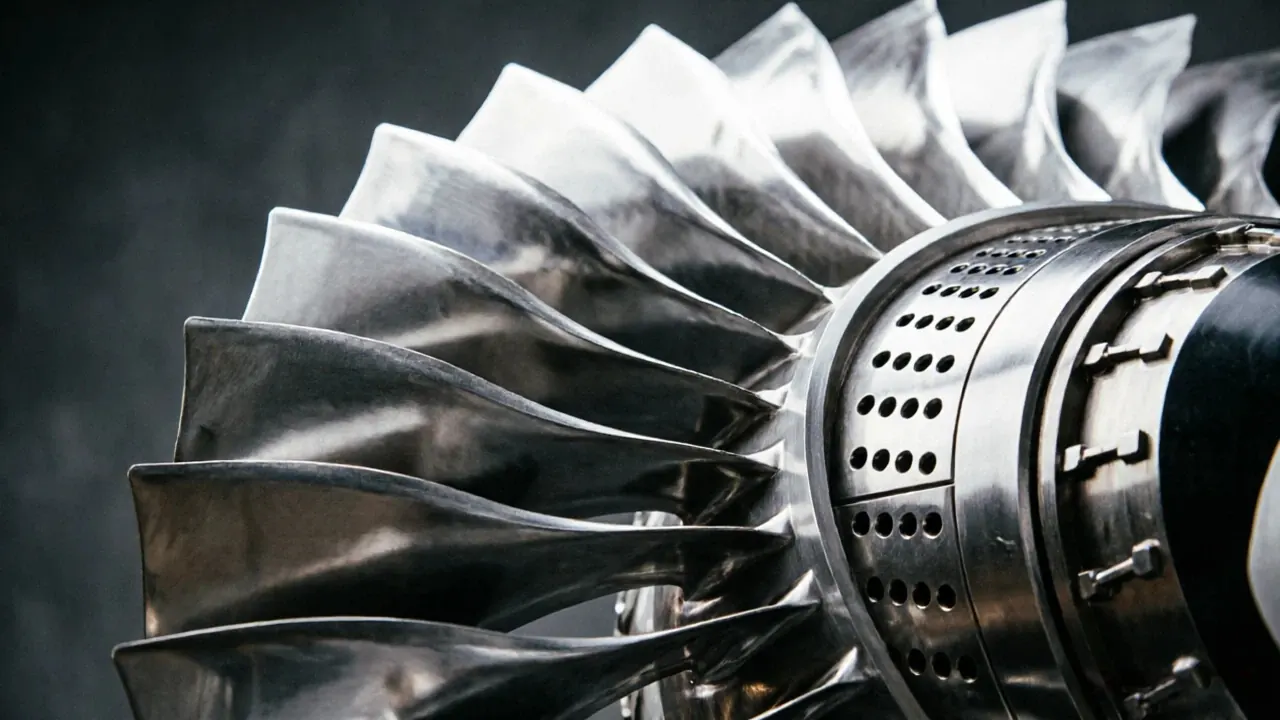
turbine blade machining case studyaerospace cnc machining5 axis aerospace machining
Turbine Blade Machining Case Study

Case Overview

Core project data for this machining case.

Industry Aerospace
Product Turbine Blade
Material Inconel 718 / Ti-6Al-4V / Rene 41
Process Investment Casting + Heat Treatment + 5 Axis CNC Machining
Machine Model HYR 5 Axis Machining Center
Tolerance +/-0.003 mm
Surface Finish Ra0.2 ~ Ra0.4
Application Jet Engines / Turbofan Engines / Gas Turbines

Problem

Machining problem to solve

Turbine blades combine: Complex Curves Superalloys Tight Tolerances Extreme Surface Requirements Traditional machining:

Solution

HYR-CNC machining plan

The customer manufactures: Turbine blades Guide vanes Engine hot section parts Industrial gas turbine components Materials:

Machine Used

Recommended machine configuration

Machine: HYR CNC machining center selected according to aerospace material, part size and tolerance
Process: Rough machining, semi-finishing, 5-axis finishing and inspection based on the document content
Accuracy Control: Rigid fixturing, thermal stability, deformation control and CMM inspection
Cost Method: Published with existing website assets first to keep implementation cost low

Process

Timeline from raw material to inspection.

01 Material preparation
02 Rough machining
03 Semi-finishing
04 5-axis finishing
05 Inspection

Full Case Article

Machining background, difficulty and solution logic.

Quick Facts

Item

Details

Industry Aerospace Product Turbine Blade Materials Inconel 718 / Ti-6Al-4V / Rene 41 Manufacturing Process Investment Casting + Heat Treatment + 5 Axis CNC Machining Machine HYR 5 Axis Machining Center Tolerance +/-0.003 mm Surface Finish Ra0.2 ~ Ra0.4 Application Jet Engines / Turbofan Engines / Gas Turbines

Introduction

A turbine blade is one of the most technologically advanced components in an aircraft engine.

Yet its operating environment is among the harshest in engineering.

Its role is simple: Convert High Energy Gas Mechanical Energy Typical turbine blade conditions: Temperature 800 degreesC 1200 degreesC 1500 degreesC Rotational speed: 10,000 RPM 20,000 RPM The blade must survive: Extreme heat High centrifugal force Thermal fatigue Oxidation Vibration Long service cycles Because of these demands: Turbine Blade = One Of The Most Difficult Parts To Manufacture

What Is A Turbine Blade?

Hot gas generated by combustion passes through turbine blades.

Inside a jet engine: Compressor Combustion Chamber Turbine The blades extract energy and drive: Compressor stages Fan systems Engine accessories Without turbine blades: No Power No Thrust No Flight

High Pressure Turbine Blade

Located directly after: Combustion Chamber Experiences: Highest temperatures Highest loads Common materials: Inconel 718 Rene 41

Low Pressure Turbine Blade

Located downstream.

Characteristics: Larger size Lower temperature Higher airflow volume

Turbine Guide Vanes

Function: Direct Gas Flow Characteristics: Complex airfoil surfaces Tight aerodynamic tolerances

Customer Background

HYR CNC developed a dedicated 5-axis turbine blade machining solution.

The customer manufactures: Turbine blades Guide vanes Engine hot section parts Industrial gas turbine components Materials: Inconel 718 Rene 41 Ti-6Al-4V Main challenges: Tool wear Complex airfoil machining Surface finish consistency Tight profile accuracy

Why Turbine Blade Machining Is Difficult

Turbine blades combine: Complex Curves Superalloys Tight Tolerances Extreme Surface Requirements

Challenge 1

A turbine blade is not flat.

Traditional machining cannot achieve this efficiently.

Complex Airfoil Geometry It contains: Twisted Surface Variable Thickness 3D Curvature Aerodynamic Profile

Challenge 2

Nickel-Based Superalloys Inconel 718 properties: High Strength at 700 degreesC+ Advantages: Heat resistance Oxidation resistance Challenges: High Cutting Force Rapid Tool Wear Heat Generation

Challenge 3

Thin Trailing Edge Typical thickness: 0.3 mm 1.0 mm Challenges: Vibration Burr formation Surface defects

Challenge 4

Surface Finish Poor blade surfaces reduce: Engine Efficiency Requirements: Ra0.2 Ra0.4

Inconel 718

The most widely used aerospace superalloy.

Advantages: Heat Resistance Corrosion Resistance Fatigue Strength Applications: Turbine blades Turbine disks Engine casings

Rene 41

Advantages: Excellent creep resistance High temperature performance Applications: Military engines High performance turbines

Ti-6Al-4V

Applications: Compressor blades Fan blades Advantages: Lightweight High strength

Why 5 Axis Machining Is Necessary

Traditional machining: Multiple Setups Tool Repositioning Accumulated Errors Modern aerospace machining: 5 Axis CNC Continuous Toolpath Single Setup Benefits: Better profile accuracy Improved surface finish Reduced cycle time Higher productivity

5 Axis Machining Center

Suitable for: Turbine Blades Guide Vanes Blisks Impellers Advantages: Simultaneous 5-axis interpolation High spindle speed Excellent surface quality

High-Speed Spindle

Specification: 15,000 RPM 24,000 RPM Benefits: Better finish Reduced tool load Higher productivity

Step 1

Investment Casting Produce: Near-net shape blade blank

Step 2

Heat Treatment Improve: Mechanical properties Grain structure

Step 3

Rough Machining Remove: Casting allowance Excess material

Step 4

Airfoil Machining Machine: Pressure Surface Suction Surface Leading Edge Trailing Edge

Step 5

Root Machining Machine: Fir tree root Dovetail features Assembly interfaces

Step 6

Finish Machining Requirement: +/-0.003 mm Ra0.2~0.4

Step 7

Polishing Improve: Surface finish Aerodynamic efficiency

Step 8

Inspection Verify: Profile accuracy Surface quality Material certification

Airfoil Profile Inspection

Requirement: +/-0.003 mm Inspect: Twist angle Curvature Thickness

Surface Finish

Requirement: Ra0.2~0.4 Inspect: Roughness Surface defects

CMM Inspection

Verify: Full blade geometry Root dimensions Airfoil profile

Material Certification

Verify: Chemical composition Heat treatment records Mechanical properties

Results

Item

After adopting HYR CNC machining solutions: Before After Profile Accuracy +/-0.010 mm +/-0.003 mm Surface Finish Ra0.8 Ra0.2~0.4 Tool Life Baseline +40% Cycle Time 100% -30% Scrap Rate 1.8% 0.15%

HYR 5 Axis Machining Center

Recommended for: Turbine Blades Guide Vanes Blisks Impellers

HYR VMC1165

Suitable for: Engine Casings Structural Aerospace Parts

Related Articles

What Is 5 Axis CNC Machining?

Compressor Impeller Machining Case Study Blisk Machining Case Study Turbine Disk Machining Case Study Inconel 718 Machining Guide

What material is commonly used for turbine blades?

Inconel 718, Rene 41 and other nickel-based superalloys are widely used.

Why are turbine blades difficult to machine?

Because they combine: Complex aerodynamic surfaces Heat-resistant materials Tight tolerances High surface finish requirements

Why is 5-axis machining necessary?

5-axis machining enables continuous machining of complex airfoil surfaces with high precision.

What tolerance is required?

or better.

Most aerospace turbine blades require: +/-0.003 mm

Conclusion

Turbine blades are among the most complex and demanding aerospace components.

Their aerodynamic surfaces, high-temperature materials and strict dimensional requirements require advanced 5-axis CNC machining technologies.

With excellent superalloy machining capability, stable dimensional accuracy and aerospace-grade manufacturing solutions, HYR CNC provides reliable and efficient turbine blade machining solutions for global aerospace manufacturers.

Result

Before and after machining improvement.

ItemBeforeAfter
Result 1Before optimizationAfter adopting HYR CNC machining solutions:
Result 2Before optimizationProfile Accuracy
Result 3Before optimization+/-0.010 mm

FAQ

Common buyer questions for this case.

What is this aerospace article about?

This page covers turbine blade requirements, machining difficulty, process planning and machine selection.

Which machines are recommended?

HYR VMC, HMC and 5-axis machining centers are selected according to material, size, tolerance and contour complexity.

Can HYR-CNC support similar aerospace parts?

Yes. Send drawings, material, tolerance and production volume for a suitable machining proposal.

Related Products

Related Articles

Similar Case Studies

More Aerospace machining proof.

Request Quote

Need a similar CNC machining solution?

Send your drawing, material, tolerance, surface finish and production volume. HYR-CNC will recommend the right machine configuration and machining proposal.

Start Machine Selection

Related Links